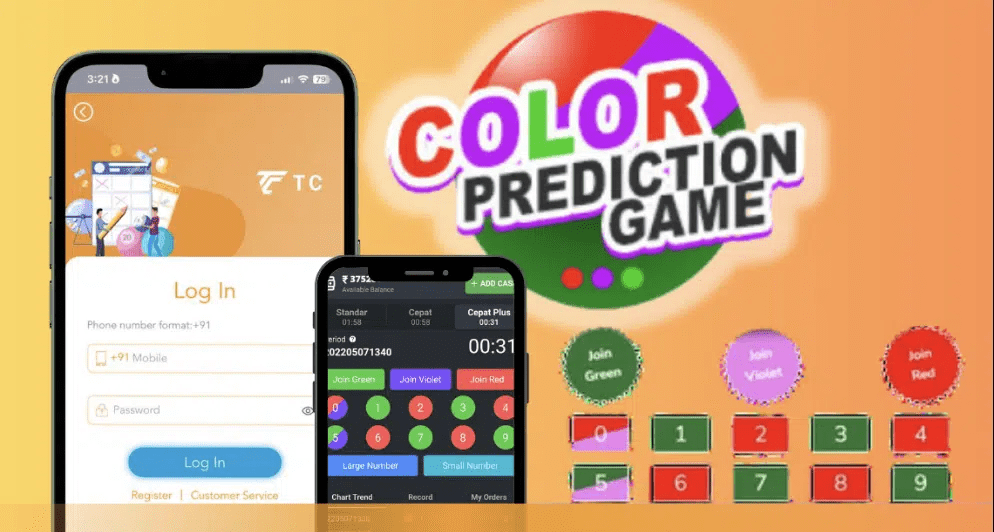
Online color prediction games have emerged as one of the most accessible forms of digital entertainment in recent years. With simple mechanics that often involve choosing between colors such as red, green, or blue, these games attract players with their ease of play and promise of quick rewards. Yet beneath the surface of this seemingly harmless pastime lies a complex interplay between entertainment and risk. The very design of these games blurs the boundary between casual fun and potentially harmful behavior, making it essential to examine how they operate and what implications they carry.
The Appeal of Simplicity
One of the primary reasons color prediction games have become popular is their simplicity. Unlike traditional video games that require skill development, strategy, or long-term commitment, these games can be played instantly with minimal effort. The straightforward nature of predicting a color outcome makes them accessible to a wide audience, including those who may not consider themselves gamers. This simplicity, however, is also what makes them particularly effective at drawing players into repeated cycles of play, as the barrier to entry is almost nonexistent.
Entertainment Through Reward Loops
At the heart of these games lies the concept of reward loops. Players make a prediction, wait for the outcome, and receive immediate feedback in the form of a win or loss. The anticipation of the result creates excitement, while the possibility of winning provides motivation to continue. This cycle of anticipation, action, and reward is deeply engaging, often leading players to spend more time on the game than they initially intended. The entertainment value is undeniable, as the games tap into fundamental psychological mechanisms that make winning feel exhilarating and losing feel like a challenge to overcome.
The Risk of Variable Rewards
While reward loops are entertaining, they also introduce significant risks. The use of variable rewards—where outcomes are unpredictable and winnings vary—creates a powerful psychological effect. Players are motivated not only by the rewards they receive but also by the uncertainty of when the next big win might occur. This unpredictability mirrors the mechanics of gambling, where the thrill of chance can lead to compulsive behavior. The risk lies in the fact that players may continue playing not because they are enjoying themselves, but because they are chasing the possibility of a reward that may never come.
Financial Implications
Many online color prediction games involve real money, either through direct betting or in-game purchases. This financial element transforms the games from mere entertainment into activities with tangible consequences. While small wagers may seem harmless, repeated losses can accumulate quickly, leading to financial strain. The fine line between entertainment and risk becomes most apparent here, as players may underestimate the potential impact of their spending. What begins as a casual game can evolve into a costly habit, particularly for individuals who struggle to control their impulses.
Psychological Conditioning
The design of color prediction games often results in psychological conditioning. Each cycle of play reinforces the association between participation and emotional highs or lows. Over time, this conditioning can lead to habitual play, where individuals feel compelled to continue even when they recognize the risks. The simplicity of the games makes this conditioning more effective, as players do not need to focus on complex strategies or rules. Instead, they are drawn into the emotional rollercoaster of wins and losses, which can be difficult to escape.
Social and Cultural Dimensions
In some regions, color prediction games are not only a form of entertainment but also a social activity. Communities of players share strategies, celebrate wins, and commiserate over losses. This social dimension amplifies the reward loop, as players gain validation and recognition from peers. However, it also increases the risk, as social pressure can encourage individuals to play more frequently or wager larger amounts. The cultural normalization of these games further blurs the line between harmless fun and risky behavior.
Ethical Considerations
The popularity of color prediction games raises important ethical questions. Developers and platforms at gaming app benefit from the engagement these games generate, but they also bear responsibility for the risks involved. Transparent rules, responsible gaming features, and clear warnings about financial consequences are essential to ensure that players are not exploited. The ethical challenge lies in balancing the entertainment value of the games with the need to protect players from harm.
Conclusion
Online color prediction games illustrate the delicate balance between entertainment and risk in digital gaming. Their simplicity and engaging reward loops make them enjoyable for many, but the use of variable rewards, financial stakes, and psychological conditioning introduces significant dangers. The fine line between fun and harm is easily crossed, often without players realizing it. As these games continue to grow in popularity, it becomes increasingly important to recognize both their appeal and their risks. Only by acknowledging this duality can players, developers, and society at large navigate the complex world of online color prediction games responsibly.